Website owners have started noticing something new in their analytics: visits that do not fit neatly into the usual organic or referral buckets. Some of these visits trace back to AI-powered search and answer tools, and many site owners are unsure how to identify them, let alone measure them with any confidence. This guide focuses specifically on that problem: how to find, track, and interpret AI search traffic using the tools already available in most analytics setups.
Direct Answer: What Is AI Search Traffic?
AI search traffic refers to website visits that originate when a user follows a link presented by an AI-powered search, chat, or answer platform. It can appear as referral traffic and sometimes as unattributed or direct traffic, depending on the platform and analytics configuration. Because attribution methods differ across platforms, tracking AI search traffic requires manual review rather than a single automatic report.
Key Takeaways
- AI search traffic is not a single, standardized analytics category.
- It typically shows up as referral traffic, though some visits may lack a clear source.
- Google Analytics 4 does not have a dedicated “AI traffic” channel by default; you build visibility into it yourself.
- Custom segments or comparisons help group known AI-related referral sources.
- Not every mention or citation in an AI answer results in a measurable click.
- Attribution behavior can change as platforms update how they pass referral data.
- The goal is a consistent tracking process, not a single perfect number.
What Is AI Search Traffic?
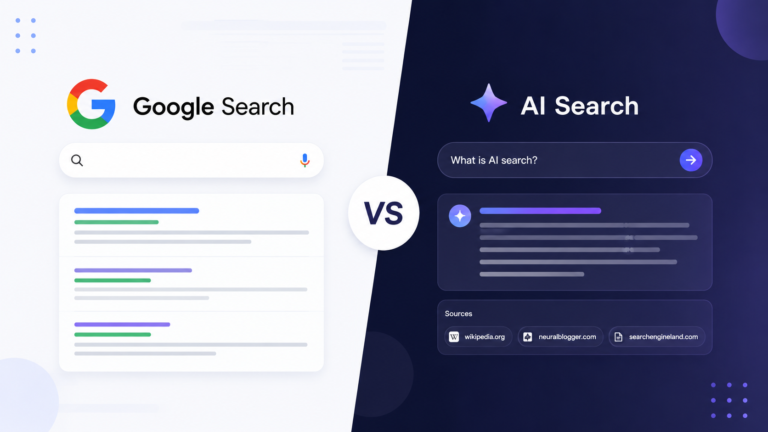
AI search traffic describes visits that arrive at a website after a user interacts with an AI-driven search, answer, or discovery experience and then clicks through to that website. This is different from traditional organic search traffic, which comes from a user clicking a result on a conventional search engine results page, and it is also different from general referral traffic, which covers any visit arriving from a link on another website.
The overlap matters here. AI search traffic is often technically a form of referral traffic in analytics platforms, but it is worth separating conceptually because the user behavior, intent, and journey leading to the click can differ from a standard referral. Whether an analytics platform labels a visit as “referral,” “organic,” or something else depends entirely on the referrer information the platform passes along, and that varies by tool and by how the destination link was constructed. There is no universal AI search traffic channel that every analytics platform recognizes out of the box.
Where Can AI Search Traffic Come From?
AI-driven visits can originate from a range of sources, including AI chat assistants that provide answers with linked sources, AI-powered search experiences that blend generated summaries with links, and AI-based discovery or recommendation tools that surface content based on a query. Some of these platforms clearly pass a referrer when a link is clicked, while others may not, depending on how the platform is built and how privacy settings are configured on the user’s device or browser.
Rather than trying to catalog every possible source in detail, the practical takeaway is this: any platform that generates an AI-assisted response and includes a clickable link to your site is a potential source of AI search traffic. The specifics of how each one is identified are covered in the following sections.
Why Tracking AI Search Traffic Matters
Monitoring AI search traffic gives website owners a clearer picture of an emerging category of visitors without assuming it will automatically outperform other channels. Reasons to track it include:
- Understanding whether a new and growing traffic source is contributing to a site’s overall visibility
- Identifying which pages or topics are earning visibility through AI-powered platforms
- Measuring referral patterns over time rather than relying on assumptions
- Finding specific pages that appear to attract AI-driven visitors
- Comparing how these visitors engage compared with visitors from other channels
None of this implies that AI search traffic is inherently more valuable than organic search traffic. It is simply a source worth understanding on its own terms, using the same rigor applied to any other channel.
How AI Search Traffic Appears in Analytics
AI search traffic can surface in a few different ways depending on several factors:
- Referral source: If the AI platform passes a referrer header, the visit typically appears as referral traffic from that domain.
- Platform behavior: Some platforms may strip or alter referrer data, especially within embedded browsers or in-app link handling.
- Browser and privacy settings: Privacy-focused browsers, extensions, or settings can block or limit referrer information from being passed at all.
- Analytics configuration: How a platform categorizes traffic (referral, direct, or a custom channel) depends on the rules and channel groupings configured in that tool.
- Available attribution data: Some visits arrive with a full URL and referrer, others arrive with partial data, and some arrive with none.
It is important not to assume that all direct or unattributed traffic is AI traffic. Traffic can appear as “direct” for many reasons, including typed URLs, bookmarks, dark social sharing, or blocked referrer data unrelated to AI platforms at all. Treating direct traffic as a proxy for AI traffic will produce misleading conclusions.
How to Track AI Search Traffic in Google Analytics 4
A practical, general workflow for reviewing AI-related traffic in GA4 looks like this:
- Review traffic acquisition reports. Start in the traffic acquisition section, which breaks down sessions by source and medium.
- Look at session source and medium. Scan for referral sources that are not part of your usual referral partners or backlink sources, since these may indicate AI-driven platforms passing traffic through.
- Identify known referral sources. Cross-reference unfamiliar domains against publicly documented referral patterns for AI platforms you are aware of, checking each one individually rather than assuming.
- Create comparisons or filters. Use GA4’s comparison feature to isolate sessions from specific sources so you can review their behavior in context.
- Review landing pages receiving traffic. Check which pages these sessions land on to understand what content is attracting this traffic.
- Analyze engagement and conversions. Look at engagement rate, engagement time, and any conversion events tied to these sessions to understand whether the traffic behaves differently from other sources.
Interface details in GA4 can change over time, so this workflow is intentionally described in terms of concepts (acquisition reports, source and medium, comparisons, landing pages) rather than exact menu paths. For the most current interface guidance, refer to Google Analytics’s own help documentation.
How to Identify AI Referral Traffic
Identifying AI referral traffic starts with reviewing the source and medium data for sessions that do not match your known backlink sources, partner sites, or usual referral list. A practical example: if a spike in referral sessions appears from a domain associated with an AI chat or search platform you know your audience uses, that is a reasonable signal worth investigating further, even though it should not be treated as absolute proof of AI-driven intent behind every session.
A few important caveats apply here. Referral domains associated with AI platforms are not fixed and can change as platforms update their infrastructure or link-handling behavior. Some AI platforms may not pass a recognizable referrer at all, meaning some AI-driven visits could appear as direct or unattributed traffic with no way to confirm the source. Not every AI platform behaves the same way, so a detection method that works for one may not work for another. Because of this, avoid relying on a single referral domain list as a permanent solution. Only track domains you can verify are actually appearing in your own analytics data rather than assuming based on generic lists found elsewhere.
Create a Custom AI Traffic Segment or Channel
Once you have identified referral sources that plausibly represent AI-driven visits, it helps to group them for ongoing review. This can be done by:
- Creating a segment or comparison in your analytics tool that filters sessions by the specific source or referral domains you have verified
- Building a custom channel grouping rule, if your platform supports it, so these sources are labeled consistently across reports
- Using source or referral pattern rules to catch variations of the same domain
The key point is that these groupings are not a one-time setup. Because referral behavior and domain patterns can shift as platforms evolve, custom rules should be reviewed periodically and adjusted when new sources appear or existing ones stop sending recognizable referral data. A rule built today may miss a source that becomes relevant six months from now or may continue tracking a source that has changed its link behavior.
Which Metrics Should You Track?
The right metrics depend on your site’s goals, but a consistent baseline helps make sense of AI-driven sessions over time.
| Metric | Why It Matters |
|---|---|
| Sessions | Shows overall volume of visits from identified AI-related sources |
| Users | Distinguishes unique visitors from repeated sessions by the same person |
| Engaged sessions | Indicates how many sessions involved meaningful interaction rather than an immediate exit |
| Engagement rate | Helps compare how AI-driven visitors interact with content relative to other channels |
| Average engagement time | Reflects how long visitors from these sources spend interacting with a page |
| Landing pages | Reveals which content is actually being reached by AI-referred visitors |
| Conversions or key events | Shows whether these sessions lead to meaningful actions relevant to your goals |
| Returning users | Useful for understanding whether AI-driven visitors come back over time |
No single metric tells the full story. Reviewing sessions alongside engagement and landing page data gives a more complete picture than looking at volume alone.
How to Find Pages Receiving AI Search Traffic
To identify which pages are attracting AI-driven visitors:
- Filter your traffic report to the referral sources or segments you have identified as AI-related
- Review the landing pages associated with those sessions
- Compare the performance of these pages against your site’s average engagement and conversion metrics
- Look for recurring patterns, such as certain content formats or topics appearing more often among these landing pages
- Check whether certain types of pages, such as detailed explainers or structured how-to content, appear more frequently than others
It is worth being cautious here. A page appearing prominently within an AI-generated answer does not guarantee that a measurable referral session will follow. Many AI-assisted queries are answered directly without the user clicking through to any source at all, which means visibility and traffic are related but not interchangeable.
How to Compare AI Search Traffic With Organic Search Traffic
| Factor | AI Search Traffic | Organic Search Traffic |
|---|---|---|
| Traffic source | AI-powered search, chat, or answer platforms | Traditional search engine results pages |
| Attribution | Often referral, sometimes unattributed | Typically clearly labeled as organic |
| User journey | May follow an AI-generated summary or conversation | Usually follows a direct search query and result click |
| Search behavior | Often conversational or answer-seeking | Often keyword-driven |
| Measurement limitations | Referral data can be inconsistent or missing. | Generally well-supported by most analytics tools |
| Typical analysis method | Custom segments, referral review, landing page analysis | Standard organic channel reports |
AI search traffic and organic search traffic should not be treated as direct substitutes for one another, since they involve different user behaviors, different levels of attribution reliability, and different analytical approaches. Comparing them side by side is useful for context, but drawing firm conclusions from that comparison requires acknowledging the measurement gaps on the AI side.
How Google AI Overviews Affect Traffic Measurement
When a page is included in an AI-generated overview, it does not automatically translate into a measurable website visit. There is an important distinction between being cited or linked as a source within an AI-generated answer, actually receiving a click from a user reading that answer, and that click then being captured as a session in your analytics platform. A page can be referenced without any of the following steps occurring, which is why visibility metrics and traffic metrics need to be treated separately rather than assumed to move together.
For a full explanation of how this feature works, see Google AI Overviews. This article focuses specifically on the measurement side: understanding that appearing in an AI-generated response is a visibility event, while a session in your analytics tool is a separate, and sometimes disconnected, measurement event.
Common Challenges When Tracking AI Search Traffic
Missing or Limited Referral Data
Some AI platforms do not pass complete referrer information, which means a portion of AI-driven visits may be impossible to distinguish from other unattributed traffic.
Changes in Platform Attribution
Referral behavior can change when a platform updates its infrastructure, link handling, or privacy practices, which means tracking rules that worked previously may stop working without warning.
Zero-Click AI Answers
Many AI-assisted queries are fully answered within the platform itself, meaning the user never visits the source website at all, regardless of how prominently that site was featured in the response.
Privacy and Browser Limitations
Browser settings, privacy extensions, and platform-level privacy features can strip or block referrer data, making some AI-driven sessions appear as direct traffic with no discernible source.
Inconsistent Traffic Classification
Different analytics tools may classify the same type of visit differently, meaning a session appearing as referral traffic in one platform could appear as direct or unassigned traffic in another.
Common Mistakes to Avoid
- Assuming all direct traffic comes from AI platforms without verification
- Treating every unfamiliar referral source as an AI-related source
- Ignoring landing page performance when reviewing AI-related sessions
- Measuring only session counts without reviewing engagement or conversions
- Assuming that visibility within an AI-generated answer always results in traffic
- Creating permanent tracking rules and never reviewing them as platforms evolve
- Comparing AI traffic and organic traffic without accounting for their different measurement conditions
How AI Search Traffic Can Inform Your Content Strategy
Reviewing which pages receive AI-driven referral traffic can highlight patterns worth paying attention to, such as which topics or formats tend to earn visibility, which pages hold engagement once a visitor arrives, and which subjects may be worth monitoring more closely over time. This data can also reveal gaps, such as content that appears to attract AI-driven interest but underperforms on engagement, suggesting an opportunity to improve clarity or usefulness.
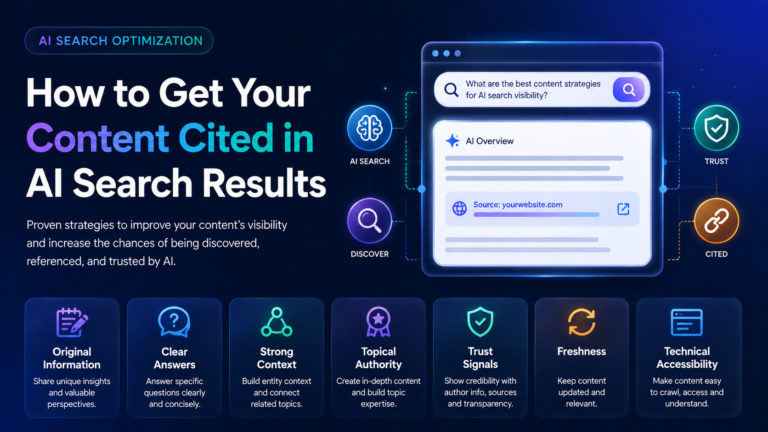
This section is not meant to serve as a full playbook for optimizing content for AI visibility. For that, see the dedicated guide on AI search optimization. Here, the focus stays on using measurement data to inform decisions rather than prescribing specific optimization tactics.
How SEO, AEO, and GEO Relate to AI Search Measurement
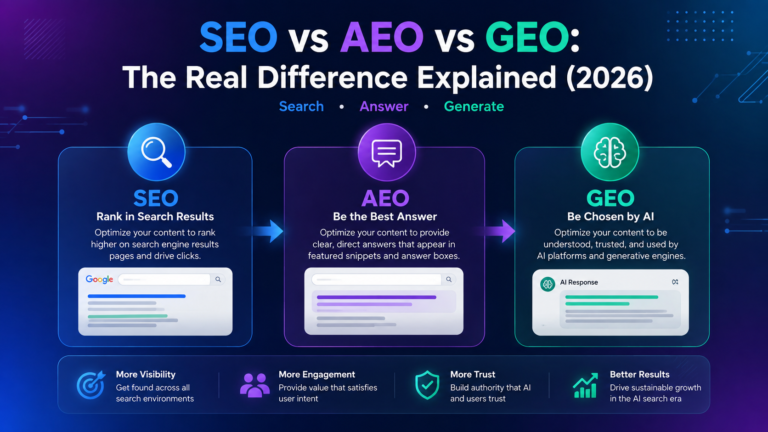
Different approaches to preparing content, including traditional SEO, answer engine optimization, and generative engine optimization, can influence how a page is discovered and cited across search engines, answer platforms, and AI-generated responses. These approaches affect how content is structured and understood by different systems, which in turn can influence whether it appears in an AI-generated answer at all.
That said, this article is concerned with measurement rather than optimization theory. For a detailed breakdown of how these approaches differ, see SEO vs AEO vs GEO. The practical implication for tracking purposes is simply that content optimized under any of these approaches may show up differently in your referral data, which is another reason to review your tracking setup periodically rather than treating it as fixed.
What AI Search Platforms Should You Monitor?
Rather than monitoring every AI platform that exists, it makes more sense to focus on the ones most likely to be used by your specific audience. This depends on your industry, your content type, and where your readers already go to find information. Reviewing your own referral data over time will often reveal which platforms are actually sending measurable traffic to your site, which is a more reliable guide than assuming based on general popularity.
For a broader look at the platforms currently shaping this space, see best AI search engines. This article does not attempt to rank or compare those platforms; it simply points to where to look when deciding which sources are worth tracking closely.
A Simple AI Search Traffic Tracking Workflow
- Identify relevant AI-related traffic sources based on your own referral data and audience behavior
- Check available referral data for each source to confirm what information is actually being passed
- Create a comparison or segment grouping the sources you have verified
- Review landing pages associated with that segment
- Track engagement metrics for those sessions
- Monitor conversions or key events tied to that traffic
- Review the data on a regular schedule rather than a one-time basis
- Update tracking rules whenever attribution patterns appear to change
Final Thoughts
Tracking AI search traffic is less about finding one definitive number and more about building a consistent, repeatable process for identifying the visits you can measure and understanding how those visitors behave once they arrive. Attribution gaps will remain a permanent part of this work, since not every platform passes complete referral data and not every AI-generated answer results in a click at all. Reviewing referral sources regularly, keeping tracking rules up to date, and pairing traffic data with engagement and conversion metrics gives a realistic and useful picture of how AI search traffic is contributing to a website’s overall visibility, even without perfect measurement.

Nikunj Pandya
Nikunj Pandya is an AI and technology professional with over 5 years of experience exploring how emerging technologies can solve real-world problems. He focuses on Artificial Intelligence, AI Search, and AI tools, sharing practical insights to help readers understand and make better use of new technology.