Modern devices generate enormous amounts of data every second, from factory sensors tracking machine vibrations to cameras monitoring traffic intersections. Sending every byte of that data to a distant data center for processing takes time, bandwidth, and reliable connectivity that is not always available. Edge computing addresses this by moving certain processing tasks closer to where data is actually created.
This guide explains what edge computing is, how it works, where it fits alongside cloud computing, and why it is gaining relevance as connected devices and on-device AI continue to expand.
Direct Answer: What Is Edge Computing?
Edge computing is a computing approach where data is processed near the location where it is generated, such as on a device, sensor, or local server, rather than sending all of it to a centralized cloud or data center. This can reduce latency, limit unnecessary data transfer, and support applications that need faster local responses. Edge computing typically works alongside cloud computing rather than replacing it entirely.
Key Takeaways
- Edge computing processes data near its source instead of relying solely on a centralized cloud or data center.
- The specific architecture of an edge computing system can vary significantly depending on the application.
- Edge computing and cloud computing are generally complementary, not competing, approaches.
- Common edge devices include sensors, cameras, industrial equipment, smartphones, and connected vehicles.
- Benefits can include reduced latency and lower data transfer, but outcomes depend on the specific use case.
- Edge computing is not the same thing as artificial intelligence; it describes where processing happens, not the intelligence of the system itself.
- Distributed infrastructure introduces real challenges around security, maintenance, and scaling.
What Is Edge Computing?
Edge computing refers to processing data closer to where it is generated or consumed, such as on a physical device, a local gateway, or a nearby server, instead of routing all of that data to a centralized cloud environment first. The term “edge” refers to the outer boundary of a network, near the devices and sensors that produce data, as opposed to the “core,” where centralized cloud data centers typically operate.
This does not mean all processing happens locally. In most real implementations, some data is handled at the edge while other data, particularly information needed for broader analysis, storage, or coordination across multiple locations, is still sent to centralized systems. Edge computing is best understood as a distribution of processing responsibilities rather than a complete replacement for centralized infrastructure.
How Does Edge Computing Work?
A basic edge computing workflow generally follows a simple pattern, though the details vary widely by application.
- A device, such as a sensor, camera, or piece of industrial equipment, generates data continuously or in response to an event.
- Some of that data is processed locally, at or near the device, using onboard computing resources or a nearby edge server or gateway. This local processing might involve filtering irrelevant data, detecting a specific condition, or making an immediate decision.
- Relevant information, summaries, or exceptions are then sent to centralized systems, such as a cloud platform, when broader analysis, long-term storage, or coordination across multiple sites is needed.
It is important to understand that edge computing architectures differ considerably depending on the use case. A smart camera performing basic motion detection locally works very differently from an industrial edge gateway aggregating data across dozens of factory sensors before forwarding a subset to the cloud. There is no single universal edge computing model, and the right architecture depends on factors like latency requirements, available connectivity, and how much local processing power the devices actually have.
What Is an Edge Device?
An edge device is any piece of hardware that generates, collects, or processes data at or near the location where that data originates, rather than in a centralized data center. Common examples include:
- Sensors used in industrial or environmental monitoring
- Security cameras and video monitoring systems
- Smartphones and tablets
- Industrial equipment and control systems
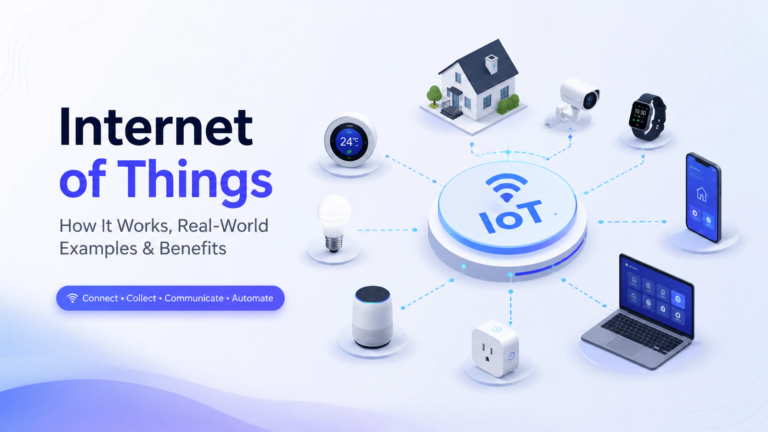
- IoT devices such as smart thermostats or connected appliances
- Local gateways that aggregate data from multiple nearby devices
- Connected vehicles equipped with onboard sensors and computing units
What counts as an edge device can vary depending on how a particular system is architected. In one deployment, a smartphone might be considered the edge itself, doing significant local processing. In another, the smartphone might simply forward raw data to a nearby gateway that performs the actual edge processing. There is no fixed rule, and the definition depends on where computation actually happens within a given system.
Edge Computing vs Cloud Computing
Edge computing and cloud computing serve different but often complementary roles. The table below highlights the general distinctions, though specific implementations can vary.
| Feature | Edge Computing | Cloud Computing |
|---|---|---|
| Processing location | Near the data source, such as on a device or local server | Centralized data centers, often located remotely |
| Latency considerations | Can reduce latency for time-sensitive local tasks | Latency depends on network conditions and distance to the data center. |
| Connectivity requirements | Can often operate with limited or intermittent connectivity | Typically requires a stable internet connection |
| Data processing | Handles data locally, often filtering or summarizing before forwarding | Handles large-scale processing, storage, and analysis |
| Scalability | Scaling requires managing distributed hardware across many locations. | Scaling is generally managed within centralized infrastructure. |
| Typical use cases | Real-time local decisions, environments with connectivity limits | Large-scale analytics, long-term storage, centralized coordination |
Edge computing does not replace cloud computing. Many systems rely on both: edge devices handle immediate, time-sensitive processing, while cloud infrastructure manages broader analysis, storage, and coordination that does not need to happen instantly.
Why Is Edge Computing Important?
Organizations may adopt edge computing for several practical reasons, though the value depends heavily on the specific application.
Reduced latency matters for applications where even a short delay in sending data to a distant server and receiving a response could be disruptive. Faster local processing allows certain decisions to be made without waiting on a network round trip. Reduced need to transmit every piece of data can lower bandwidth demands, particularly for devices generating continuous streams of sensor or video data. Some environments also have limited or unreliable connectivity, making local processing a practical necessity rather than an optimization. Finally, some applications have local processing requirements, such as regulatory or operational rules that require certain data to be handled on-site.
It is worth being clear that edge computing does not automatically improve every application. Systems that do not have strict latency requirements or bandwidth constraints may see little practical benefit from adding edge infrastructure, and in some cases the added complexity may outweigh the advantages.
Benefits of Edge Computing
Faster Response Times
Processing data locally can reduce the delay between when data is generated and when a decision or action is taken, which matters for applications where immediate responses are important.
Reduced Data Transfer
Filtering, summarizing, or acting on data locally means that only relevant information needs to be sent onward, which can reduce the volume of data transmitted across a network.
Support for Real-Time Applications
Applications that depend on immediate feedback, such as certain automated systems or interactive tools, can benefit from processing that does not depend entirely on a round trip to a centralized server.
Better Performance in Limited Connectivity Environments
In locations with unreliable or restricted internet access, such as remote industrial sites, local processing allows systems to continue functioning without constant dependence on a network connection.
Local Data Processing
Certain data may need to be processed or retained locally due to operational needs, sensitivity, or the nature of the application itself, rather than being routed through external infrastructure.
Each of these benefits depends on the specific architecture and use case. A well-designed edge system in one context may not translate to the same advantages in another, particularly if the application does not have real latency or connectivity constraints to begin with.
Challenges and Limitations of Edge Computing
Edge computing introduces its own set of practical challenges that organizations need to plan for.
Managing distributed infrastructure across many physical locations is inherently more complex than managing centralized servers. Security requirements increase because each edge device or local server represents a potential access point that needs to be protected. Hardware limitations at the edge, such as limited processing power or storage, can restrict what kinds of tasks can realistically be handled locally. Deployment complexity grows as organizations coordinate updates, configurations, and compatibility across many distributed devices. Monitoring and maintenance become more demanding when infrastructure is spread across numerous sites rather than housed in a single data center. Data synchronization between edge devices and centralized systems can also introduce complications, particularly when connectivity is inconsistent. Finally, scaling edge infrastructure, adding more devices or locations, requires careful planning around consistency, updates, and network management.
These challenges do not make edge computing impractical, but they explain why it is typically adopted for specific applications with clear latency, connectivity, or processing requirements rather than as a default approach for every system.
Real-World Edge Computing Examples
Smart factories may use edge processing to monitor equipment sensors locally, allowing rapid detection of anomalies without waiting for data to travel to a distant server.
Connected vehicles can process certain sensor data, such as from cameras or proximity sensors, locally to support functions that require immediate responses.
Retail systems may use edge devices at store locations to process point-of-sale data or inventory sensors locally before syncing broader data to central systems.
Smart cities can rely on edge processing for infrastructure such as traffic sensors or environmental monitoring equipment distributed across a city.
Healthcare technology may use edge processing for certain monitoring devices where local handling of sensitive data is required.
Security cameras often perform local motion detection or basic analysis before sending relevant footage or alerts onward, rather than streaming everything continuously.
IoT systems in general frequently rely on edge processing to manage the volume of data generated by many connected sensors.
Gaming and interactive applications may use local processing to reduce the delay between user input and system response.
These examples illustrate general patterns in how edge processing can be applied. Specific implementations vary by organization and system design.
Edge Computing and Artificial Intelligence
Edge computing can support AI workloads by enabling certain models to run locally rather than requiring a connection to a centralized server for every inference. This is sometimes referred to as on-device AI or local AI processing, where a device performs tasks such as image recognition or pattern detection without sending raw data elsewhere first.
Running AI processing at the edge can reduce latency for applications that need real-time decision making, and it can also limit how much raw data needs to be transmitted externally. However, it is important to make a clear distinction: edge computing refers to where computing or processing occurs, while artificial intelligence refers to the systems and models designed to perform tasks such as prediction, recognition, or generation. Edge computing is an architectural approach; AI is a category of technology that can run in edge environments, cloud environments, or both, depending on the system.
Edge Computing and AI PCs
Some modern devices are designed to run AI workloads locally rather than depending entirely on cloud-based processing. This local, on-device approach shares conceptual ground with edge computing, since both involve handling certain processing tasks closer to the user rather than routing everything to a centralized server. For a deeper look at how this works in personal computing hardware specifically, see the guide on AI PCs, which covers on-device AI processing in more detail.
Edge Computing and AI Agents
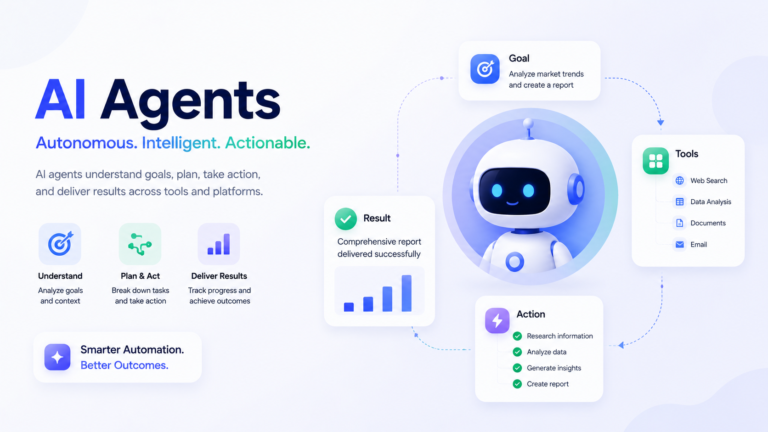
Autonomous or semi-autonomous software systems, often referred to as AI agents, can potentially operate across different computing environments depending on how a particular system is designed. Some components of an agent-based system might run locally at the edge to handle immediate tasks, while other components rely on centralized cloud infrastructure for broader processing or coordination. The specific division between local and centralized processing depends entirely on the architecture of the system in question.
Common Edge Computing Use Cases
| Use Case | How Edge Computing May Help |
|---|---|
| Manufacturing | Local monitoring of equipment sensors to detect issues without delay |
| Healthcare | Local processing of certain monitoring data where immediate handling is needed |
| Transportation | Local processing of sensor data in connected vehicles for time-sensitive functions |
| Retail | Local handling of point-of-sale or inventory data at store locations |
| Smart homes | Local processing for connected devices without constant reliance on external servers |
| IoT | Managing and filtering data generated by large numbers of connected sensors |
| Security systems | Local analysis of camera or sensor data before sending relevant alerts onward |
| AI applications | Running certain AI models locally to reduce latency for real-time tasks |
Is Edge Computing the Same as Fog Computing?
Not exactly, though the two concepts are closely related,, and terminology can vary across the industry. Edge computing generally refers to processing that happens directly on or very near the device generating the data. Fog computing typically describes an intermediate layer of processing, often involving local networks or gateways that sit between edge devices and centralized cloud infrastructure. In practice, the distinction between the two terms is not always applied consistently, and some organizations use them interchangeably depending on their specific architecture.
Does Edge Computing Replace Cloud Computing?
No. Edge computing and cloud computing generally work together rather than in competition. Certain workloads benefit from being processed close to the source, particularly when latency, bandwidth, or connectivity is a concern. Other tasks, such as large-scale data analysis, long-term storage, or coordination across many locations, are typically better suited to centralized cloud infrastructure. Most practical systems combine both approaches, using each where it makes the most sense for a given task.
The Future of Edge Computing
Several trends may influence how edge computing develops going forward. The continued growth of connected devices across industries is likely to increase the volume of data generated at the edge, which could make local processing more relevant for managing that data efficiently. On-device AI processing may also continue to expand as hardware capable of running AI models locally becomes more common. Real-time applications, from industrial automation to interactive technologies, could continue to drive interest in architectures that reduce dependence on constant cloud connectivity. Distributed computing architectures that blend edge and cloud resources may become more refined as tools for managing them mature. Tighter integration between cloud platforms and edge infrastructure is also a plausible direction, allowing organizations to manage both environments more cohesively.
These are reasonable directions based on current patterns rather than guaranteed outcomes, and how edge computing evolves will likely depend on how connected devices, AI capabilities, and network infrastructure continue to develop.
Final Thoughts
Edge computing is fundamentally about moving certain computing processes closer to where data is generated or needed, rather than routing everything through a centralized cloud or data center. It is not a single fixed architecture but a flexible approach that looks different depending on the devices, latency requirements, connectivity conditions, and processing needs involved.
Its actual value depends entirely on the specific application. Some systems benefit significantly from local processing, while others have little need for it. Understanding edge computing means recognizing it as one part of a broader computing landscape that includes cloud infrastructure, local devices, and increasingly, AI systems that can run in either environment depending on how they are designed.

Jigar Pandya
Jigar Pandya is a Technology and WordPress professional with over 6 years of experience building and improving websites. His work covers WordPress development, website performance, and modern web technologies, with a focus on creating websites that are fast, reliable, and easy to use.