Most businesses publish content for months before anyone asks the obvious question: what is this content actually supposed to do? A blog fills up with posts, a social account fills up with updates, and somewhere along the way the connection between the content and the business gets lost. Content marketing only works when that connection is deliberate from the start.
This guide explains what content marketing actually is, how it differs from a content strategy, a content plan, and a content calendar, and how to build a practical content marketing strategy step by step.
Direct Answer
Content marketing is the practice of creating and distributing useful, relevant content to attract and engage a specific audience in support of a defined marketing or business goal. It works alongside a content strategy, which decides what content should achieve and why, and a content plan, which organizes what gets created and when.
Key Takeaways
-
Content marketing is a broad approach, not a single tactic like blogging or social posting.
-
A content marketing strategy connects audience needs, business goals, topics, formats, distribution, and measurement.
-
Content marketing, content strategy, content plan, and content calendar are related but distinct concepts.
-
Useful content should serve one primary goal at a time, such as awareness, education, or lead generation.
-
Topic selection should be based on audience problems and search intent, not guesswork.
-
Distribution and measurement matter as much as content creation itself.
-
A content marketing strategy improves through ongoing review, not one-time planning.
What Is Content Marketing?
Content marketing means creating content that helps a specific audience, with the expectation that this help builds enough trust, visibility, or understanding to eventually support a business outcome. It is not advertising, and it does not ask for a sale in the first sentence.
Consider a software company that sells project management tools. Instead of only running ads, it creates tutorials on managing remote teams, comparison guides between tools, and articles explaining common project bottlenecks. A reader researching how to fix scheduling conflicts finds one of these articles, gets a genuinely useful answer, and remembers the company later when evaluating software.
That is content marketing in practice. The content itself does not close the sale. It builds familiarity and trust over time, and the exact role it plays depends on the business:
-
Awareness: introducing a brand or product category to people who did not know it existed.
-
Organic discovery: helping a website get found through search rather than paid placement.
-
Audience education: helping existing or potential customers understand a topic well enough to make a decision.
-
Trust: demonstrating expertise so a brand feels credible rather than anonymous.
-
Lead generation: capturing contact information from people who engage with the content.
-
Customer retention: helping existing customers get more value from a product so they stay.
A single article rarely serves all of these goals equally well. Effective content marketing means being clear about which goal a given piece of content is actually built to serve.
How Does Content Marketing Work?
Content marketing works through a repeated cycle: understand what the audience needs, create content that addresses that need, make sure the content can be found, and track whether it moved the audience toward the business goal.
The mechanism is straightforward. Search engines and social platforms surface content that matches what people are actively looking for. When that content genuinely answers the question, some portion of readers take the next step, whether that is subscribing, requesting a demo, or simply returning when they have a related question. Over time, a body of useful content compounds: older articles keep attracting new visitors while newer ones extend into related topics.
This only functions as a system, not as isolated publishing. A single blog post rarely changes a business outcome on its own. A defined content marketing strategy that guides many pieces of content toward a shared purpose does.
Content Marketing vs Traditional Advertising
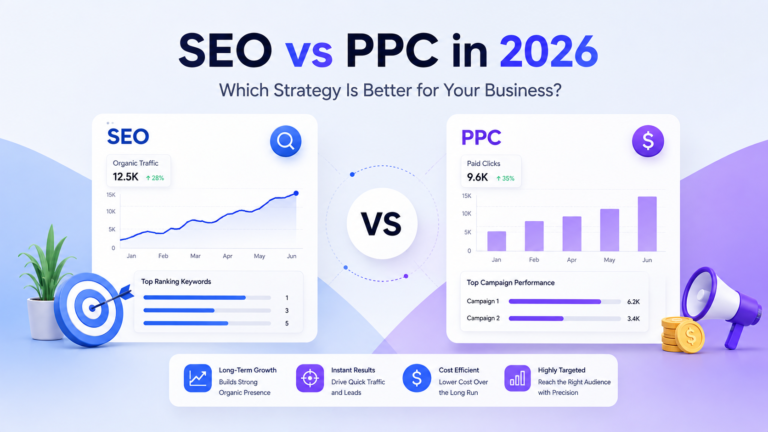
Traditional advertising buys attention directly: a business pays to interrupt an audience with a message, and the message stops the moment payment stops. This overlaps with the acquisition role that search advertising plays, and readers comparing SEO vs PPC as acquisition channels will notice a similar pattern: content marketing behaves more like organic search than like paid placement, because it earns attention rather than purchasing it.
Content marketing earns attention by offering something valuable before asking for anything in return. It tends to take longer to produce results, but well-made content can keep attracting an audience long after it was published, without ongoing spending to keep it visible. Advertising and content marketing are not competitors; many businesses use both, with advertising driving faster, more immediate visibility and content marketing building a durable base of organic attention and trust.
Content Marketing vs Content Strategy
These terms get used interchangeably, and that habit causes real confusion when a team tries to plan actual work.
Content marketing is the overall marketing approach: using content to attract, engage, and retain an audience in service of a business goal. It is a category of activity, similar to how “advertising” or “email marketing” describes a category.
A content strategy is the specific plan that defines how content marketing will work for a particular business. It answers questions like what is the primary goal, who is the audience, what topics will be covered, and how will success be measured? A content strategy is the thinking layer that sits above the day-to-day work.
Without a content strategy, content marketing becomes a stream of disconnected pieces that may individually be well written but collectively go nowhere.
Content Strategy vs Content Plan vs Content Calendar
Once a content strategy exists, it needs to be translated into actual work, and that is where a content plan and a content calendar come in. These three terms describe three different layers of the same system.
A content strategy defines the destination: the goal, the audience, and the topics that matter. A content plan organizes the specific pieces of content needed to execute that strategy, including their format, purpose, and audience segment. A content calendar schedules when each piece in that plan will be produced and published.
Treating a content calendar as a substitute for a content strategy is one of the most common mistakes in content marketing. A calendar full of publishing dates says nothing about whether the content connects to a business goal. Strategy comes first; the plan organizes the work the strategy requires, and the calendar simply schedules that work.
Why Content Marketing Matters
Content marketing matters because a growing share of buying decisions, in both consumer and business contexts, start with research rather than a direct pitch. People compare options, read explanations, and look for evidence of expertise before they commit to a purchase or even a conversation with a salesperson.
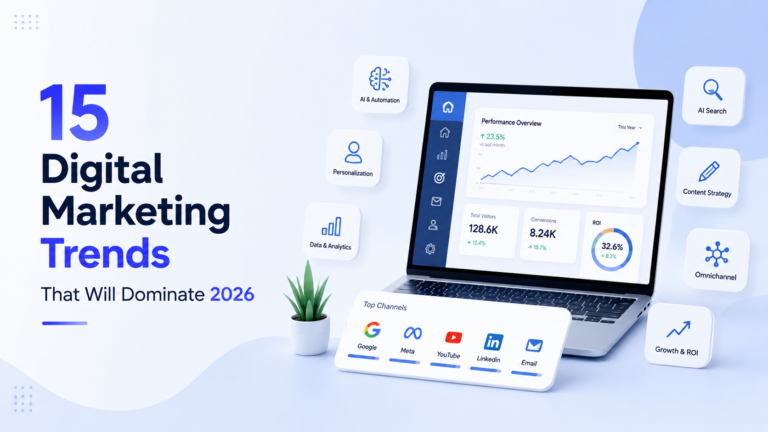
Content that shows up during that research phase has a chance to shape the outcome. A business without that content is invisible during the part of the decision process where trust is often built. This does not mean content marketing replaces other channels. It functions alongside paid acquisition, email, and sales outreach, and it fits into the broader shift toward digital marketing trends in 2026, where audiences increasingly research across multiple touchpoints, including AI-driven search tools, before engaging with a brand directly.
Common Types of Content Marketing
The right format depends on the audience and the goal, not on what feels trendy. Here are the categories most businesses draw from.
Blog Content
Articles, guides, and explainers published on a website. Blog content is well suited to informational and how-to search intent, and it tends to compound in organic search value over time when it is genuinely useful.
Video Content
Tutorials, product walkthroughs, and explainer videos. Video works well when a topic benefits from visual demonstration or when the audience prefers watching over reading.
Email Content
Newsletters and nurture sequences sent to people who have already opted in. Email content is useful for maintaining a relationship over time rather than reaching new audiences.
Social Media Content
Posts, short videos, and updates distributed on social platforms. Social content is often better suited to awareness and engagement than to detailed education, given the format constraints of most platforms.
Guides and Educational Resources
Longer, structured resources such as ebooks, templates, or in-depth guides. These work well for lead generation, since audiences are often willing to exchange contact information for something substantial.
Case Studies and Customer Stories
Content that shows how a real customer used a product or service to solve a problem. Case studies support later-stage decision-making, when a prospect is comparing specific options rather than researching a general topic.
How to Build a Content Marketing Strategy
This is the operational core of the article. Each step builds on the one before it, and skipping a step tends to surface as a problem later, usually as content that gets published but does not move any measurable outcome.
Step 1: Define Your Main Goal
Before choosing topics or formats, decide what the content is actually for. Common goals include building awareness, increasing relevant organic traffic, generating leads, supporting sales conversations, educating existing customers, or building authority around a specific subject.
A small team or a solo operator generally gets better results by prioritizing one primary goal rather than trying to make every piece of content serve every possible purpose at once. Content written to simultaneously attract search traffic, generate leads, support sales, and please existing customers usually ends up doing none of these particularly well, because each goal implies different topics, depth, and calls to action.
Step 2: Understand Your Target Audience
Vague advice like “know your audience” is not actionable. Work through specific questions instead:
-
Who exactly is this content for: role, situation, or stage in a buying or usage journey?
-
What problem are they actively trying to solve right now?
-
What questions do they type into a search engine or ask in a community?
-
What information do they need before they can make a decision or take an action?
-
Where do they search or consume content: Google, YouTube, a specific forum, or a social platform?
-
What is the realistic next action they might take after finding a useful answer?
If these questions cannot be answered with any specificity, that is a signal to talk to actual customers, read support tickets, or study community discussions before writing anything.
Step 3: Identify Audience Problems and Search Intent
Useful content starts with a real problem, not a topic that sounds interesting. Search intent generally falls into four categories, and each one shapes what the content needs to deliver:
-
Informational intent: the person wants to understand something, with no immediate purchase in mind.
-
Commercial investigation: the person is comparing options before deciding.
-
Transactional intent: the person is ready to act, such as searching to buy or sign up.
-
Navigational intent: the person already knows where they want to go and is using search to get there.
Intent should influence format, depth, and calls to action. An informational query usually calls for a clear explanation without a hard pitch. A commercial investigation query benefits from honest comparisons. Getting this wrong, such as pushing a sales pitch onto someone who only wants a definition, is a common reason content fails to satisfy the reader even when it technically covers the right topic.
Step 4: Choose Your Core Topics
Random publishing produces a scattered library that never builds authority on any single subject. Instead, organize content around a manageable number of core topic areas that connect to the business and to what the audience actually searches for.
A digital marketing website, for example, might build related content around SEO, content marketing, email marketing, paid advertising, and conversion optimization, rather than trying to cover every marketing subject that exists. Not every website needs to cover every possible topic. Choosing fewer core areas and covering them thoroughly tends to build more authority than spreading thin across everything.
Step 5: Select the Right Content Formats
Format should follow from the audience, the topic, the search intent, and the resources actually available to produce content consistently. A complex software workflow may be better explained through video than text. A comparison between two approaches may work best as a structured article with a table. A quick answer to a common question may not need more than a short, focused piece.
No single format is universally best. A team with strong writing skills but no video production capacity should build a strategy around what it can consistently produce well, rather than chasing a format that looks impressive but cannot be sustained.
Step 6: Create a Realistic Content Plan
A content plan organizes the specific pieces the strategy calls for. For each item, it helps to define:
-
The topic
-
The target audience segment
-
The search intent it addresses
-
The content format
-
The primary goal it serves
-
The distribution channel
-
A realistic publishing timeline
Consistency matters more than frequency. A business publishing one genuinely useful article every two weeks, sustained over a year, will generally outperform a burst of daily posts that stops after a month. A realistic, sustainable schedule beats an ambitious one that collapses under its own workload.
Step 7: Create and Optimize Content
Quality content shares a few practical traits regardless of format: a clear structure the reader can follow, original value that is not just a rewrite of existing pages, accurate information, examples relevant to the actual audience, direct answers to the questions that brought the reader there, headings that reflect real subtopics rather than decoration, alignment with the search intent identified earlier, sensible internal linking to related content on the site, and a clear next step for the reader.
None of this requires a full SEO overhaul of every page. It means treating optimization as a natural extension of writing something genuinely useful, not a separate mechanical process layered on afterward. Some teams use AI tools during ideation or early drafting to speed up research and outlining; a look at AI prompts for bloggers shows how that can fit into a workflow, provided the output still gets meaningful human review before publishing.
Step 8: Build a Content Distribution Plan
Publishing content is only one part of the process. Content that sits on a website with no distribution plan often waits far longer to be discovered than content that gets actively pushed toward an audience.
Relevant channels vary by audience and business:
-
Search engines, through organic optimization for the topics the audience already searches.
-
Email, sending new content to an existing subscriber list.
-
Social media, sharing content where the target audience already spends time.
-
Communities, such as forums or niche groups where the topic is genuinely discussed.
-
Relevant partnerships, including guest contributions or collaborations with adjacent businesses.
-
Other channels, including emerging surfaces such as AI chat interfaces, where paid options are also starting to appear alongside organic visibility.
Distribution should be chosen based on where the intended audience can realistically discover the content, not based on which channel is easiest to post to.
Step 9: Measure Performance
Metrics should map back to the goal defined in Step 1. Relevant metrics include organic traffic, search visibility for target topics, engagement such as time on page or scroll depth, email signups, leads generated, direct conversions, and assisted conversions where multi-touch measurement is available.
A high traffic number does not automatically mean success. An article driving thousands of visits that never engage with anything else on the site may be performing worse, against a lead generation goal, than a smaller article that consistently produces qualified signups. The right metric is the one connected to the original purpose of the content, not the biggest number on the dashboard.
Step 10: Improve the Strategy Over Time
Performance data should inform ongoing decisions: which existing content needs updating because it has gone stale, which topics deserve more investment because they are already performing, whether a format change might serve the audience better, where internal linking could better connect related pieces, whether distribution channels need adjusting, and whether calls to action need refining.
This should be a deliberate, periodic review rather than a reaction to short-term fluctuations. A single slow month is rarely a reason to abandon a topic or delete content that was performing well previously. Content marketing strategies mature through steady, evidence-based adjustment, not through frequent reversals.
Common Content Marketing Mistakes
-
Publishing content without a clear goal attached to it.
-
Trying to write for everyone instead of a defined audience.
-
Choosing topics based on personal interest rather than confirmed search intent.
-
Creating content only to satisfy search engines, without genuinely helping the reader.
-
Publishing on an inconsistent schedule with no sustainable workflow behind it.
-
Ignoring distribution and assuming good content will be found on its own.
-
Measuring only traffic while ignoring whether it connects to the business goal.
-
Producing repetitive content that covers the same angle already published elsewhere on the site.
-
Leaving older, still-relevant content unrevised for years while it quietly loses accuracy and rankings.
-
Using AI-generated output directly, without meaningful human review, fact-checking, or added expertise.
A Simple Content Marketing Strategy Example
Consider a small online business selling handmade skincare products.
Goal: increase relevant organic traffic that leads to email signups.
Audience: people researching natural skincare ingredients and routines, largely in the awareness and early research stage.
Core topic: ingredient education and routine guidance for sensitive skin.
Content format: blog articles paired with a downloadable routine guide offered in exchange for an email address.
Distribution method: organic search, supported by sharing new articles through an existing email newsletter and relevant skincare communities.
Success metric: email signups generated per article, tracked alongside organic traffic to confirm the content is reaching the intended audience.
This example stays deliberately generic. The specific numbers, timelines, and results for any real business will depend on its market, resources, and execution.
Content Marketing Strategy Checklist
-
Define one primary goal for the content marketing effort.
-
Document who the target audience is, including their problems and where they search.
-
Confirm search intent for planned topics before committing to a format.
-
Choose a manageable set of core topics connected to the business.
-
Match content formats to audience preference, topic, and available resources.
-
Build a realistic content plan with topic, format, goal, and channel for each piece.
-
Set a sustainable publishing schedule instead of an ambitious one likely to collapse.
-
Optimize each piece for clarity, accuracy, and genuine usefulness before publishing.
-
Plan distribution across the channels where the audience actually spends time.
-
Track metrics tied directly to the original goal, not vanity numbers.
-
Review performance periodically and update or expand what is working.
-
Revisit and refresh older content rather than letting it go stale indefinitely.
Conclusion
Content marketing is not the act of publishing blog posts or filling a social calendar. It is a connected system: a defined audience, a specific goal, topics chosen around real problems, formats that fit both the audience and the team’s resources, a distribution plan that gets the content seen, and measurement that ties everything back to why the content exists in the first place. A content strategy sets that direction, a content plan organizes the work, and a content calendar simply schedules it. Businesses that treat these as one undifferentiated task tend to produce content that looks busy but goes nowhere. Businesses that separate strategy from planning from scheduling, and revisit each layer as they learn what works, are the ones that build a content marketing system that actually compounds over time.

Gunashekar Reddy
Gunashekar is a Digital Marketing and SEO professional with over 5 years of experience helping businesses improve their online presence. His work focuses on SEO, content strategy, and organic growth, using search insights and performance data to build practical digital marketing strategies.