A few years ago, winning Google’s first organic position was the goal of almost every SEO strategy. Today, that goal hasn’t disappeared, but the search experience has changed dramatically.
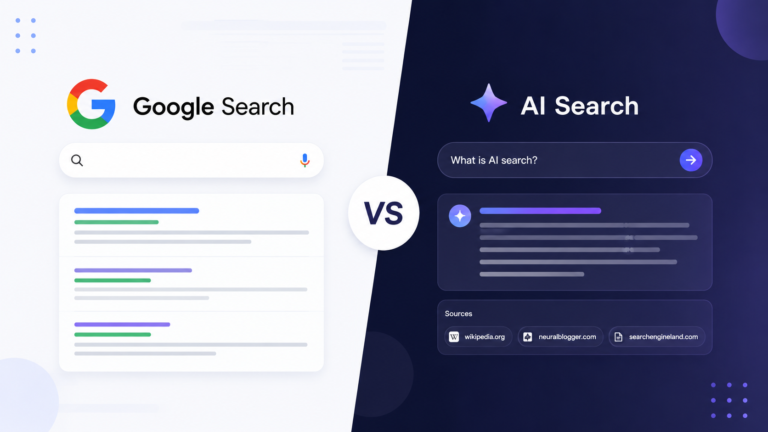
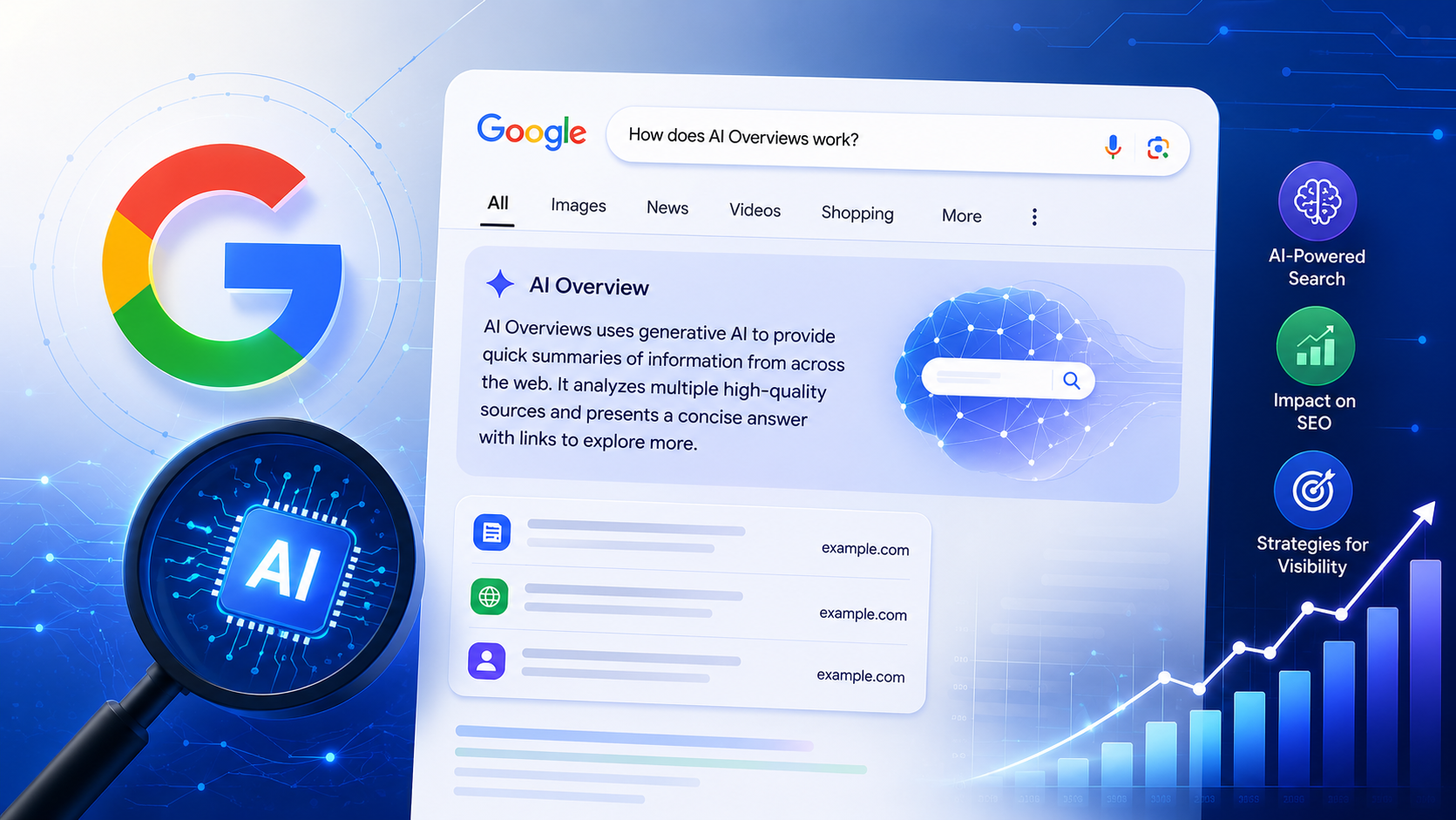
Instead of showing only ten blue links, Google can now answer many questions directly through AI Overviews. For some searches, users receive an AI-generated summary before they even see the traditional organic results. That single change has forced bloggers, publishers, businesses, and SEO professionals to rethink how they create content.
Naturally, many website owners have started asking the same questions.
- Will AI overviews reduce my traffic?
- Is traditional SEO becoming obsolete?
- Can smaller websites still compete?
- How does Google decide which sources to include?
These are valid concerns, but they often lead to the wrong conclusion. Google AI Overviews are not replacing websites. They are changing how information is discovered, summarized, and evaluated. Users still need trustworthy sources, detailed explanations, product comparisons, tutorials, first-hand experience, and expert opinions. AI Overviews simply change the path users take before reaching those sources.
For publishers, this shift creates both challenges and opportunities. Websites that rely on generic content may lose visibility, while those that publish original, experience-driven, and well-structured content can become valuable sources for Google’s AI-generated answers.
Understanding how AI overviews work is no longer optional. Whether you run a blog, an e-commerce store, a SaaS business, or an affiliate website, adapting your content strategy now will help you remain visible as search continues to evolve.
What Are Google AI Overviews?
Google AI Overviews are AI-generated summaries that appear at the top of certain search results. Instead of displaying only traditional organic listings, Google combines information from multiple trusted sources to answer a user’s question directly within the search results.
AI Overviews are designed to help users understand a topic faster while still providing links to websites where they can explore the subject in greater depth. Rather than replacing web publishers, they act as another layer within Google’s search experience.
Key Takeaways
- Google AI Overviews summarize information from multiple web sources instead of relying on a single webpage.
- Traditional SEO still matters because AI overviews depend on high-quality web content.
- Original experience, topical authority, and trustworthy information are becoming more valuable than generic content.
- Small websites can appear in AI Overviews if they consistently publish helpful, well-structured content.
- Search intent plays a bigger role than keyword repetition.
- AI Overviews change user behavior, but they do not eliminate the need for publishers.
- The future of SEO is no longer about ranking alone. It is about becoming a trusted source of information.
Why Google Introduced AI Overviews
Google has always had one objective: help users complete their task as quickly as possible.
Years ago, that meant returning the most relevant webpages. Later, Google introduced Featured Snippets, Knowledge Panels, local results, image packs, video results, and People Also Ask sections to reduce the number of searches users needed to perform.
AI Overviews are the next step in that evolution.
Instead of forcing users to open five or six different pages to understand a topic, Google attempts to summarize the most useful information into one clear response.
How do Core Web Vitals affect SEO?
Without AI overviews, the user might need to read multiple articles before understanding the relationship between Largest Contentful Paint, Interaction to Next Paint, Cumulative Layout Shift, rankings, and user experience.
With AI Overviews, Google can explain the relationship in a few paragraphs while still linking to the original sources that provide additional context.
From Google’s perspective, this improves the search experience because users receive faster answers while maintaining access to authoritative publishers.
For publishers, however, the challenge becomes creating content valuable enough that Google chooses it as part of those summaries.
How Google AI Overviews Work
Google has not published every detail of how AI Overviews generate responses, but enough public information exists to understand the overall process.
Unlike traditional featured snippets, which usually extract information from a single page, AI overviews synthesize information from multiple trusted sources.
A simplified workflow looks like this:
- A user submits a search query.
- Google analyzes the search intent behind that query.
- Google’s systems determine whether an AI-generated response would improve the search experience.
- If appropriate, Google’s AI models gather information from relevant web pages.
- The information is evaluated, summarized, and organized into a readable response.
- Google includes links to supporting sources so users can continue exploring the topic.
One important point often misunderstood is that AI overviews do not replace Google’s ranking systems.
The same foundations that have shaped search for years still matter:
- Helpful content
- Topical relevance
- Search intent
- Page quality
- Website trust
- User experience
- Technical SEO
- Internal linking
- Freshness where appropriate
AI Overviews build on these signals rather than ignoring them.
How AI Overviews Differ From Featured Snippets
Many people assume AI overviews are simply a larger version of featured snippets.
They are not.
Featured Snippets usually answer one question by highlighting content from a single webpage.
AI Overviews combine information from multiple sources into one generated response.
For example, if someone searches
Best beginner SEO strategy
A Featured Snippet might quote one article explaining keyword research.
An AI overview may combine the following:
- Keyword research advice from one website
- Internal linking recommendations from another
- Technical SEO guidance from another
- Content strategy insights from another
The final response becomes a synthesis rather than a quotation.
This difference changes how publishers should think about content.
Instead of trying to create one paragraph that wins the Featured Snippet, your goal becomes creating authoritative sections that Google considers reliable enough to include in a broader AI-generated explanation.
When Does Google Show AI Overviews?
Not every search triggers an AI overview.
Google generally displays them when the system believes an AI-generated response will help users complete their task more efficiently.
They appear most often for searches involving:
- Educational topics
- Complex questions
- Multi-step processes
- Comparisons
- Health and wellness information
- Technology explanations
- Financial education
- Travel planning
- Coding questions
- Product research
By contrast, AI overviews appear less frequently for highly transactional searches where users are clearly looking to purchase a product or navigate directly to a website.
For example:
Buy iPhone 17 Pro
Google understands the user’s intention is to shop, not read a generated explanation.
Similarly, brand-specific navigational searches often continue to prioritize direct website access over AI summaries.
This demonstrates an important principle.
AI Overviews are closely tied to search intent. Google only generates summaries when they improve the search experience.
That means publishers should stop asking the following:
“How do I rank inside AI Overviews?”
Instead, ask:
“What information is the user actually trying to understand before making their next decision?”
That small shift in thinking often produces better content.
Why AI Overviews Are Changing SEO
For years, SEO focused heavily on rankings.
Higher ranking meant more visibility.
More visibility often meant more clicks.
Today, the relationship is becoming more nuanced.
Some informational questions may now receive complete answers directly inside Google.
That does not mean SEO is disappearing.
It means SEO is becoming more focused on depth, originality, trust, and usefulness.
Generic articles that repeat information already available everywhere have less value because AI can summarize them easily.
Original research, expert analysis, first-hand experience, practical workflows, detailed comparisons, and unique perspectives are much harder to replace.
This is exactly where publishers should invest their effort.
Instead of writing content that simply answers a question, create content that helps readers make better decisions after reading the answer.
That is where AI Overviews still depend on human expertise.
Do Google AI Overviews Reduce Organic Traffic?
This is probably the question every website owner wants answered.
The honest answer is yes, for some searches, but the situation is more nuanced than many headlines suggest.
If someone searches a simple factual question such as
“What is schema markup?”
Google AI Overviews may provide enough information for that user without requiring an additional click.
In those situations, publishers may see fewer visits for informational queries that have straightforward answers.
However, not every search ends there.
Once users move beyond basic understanding, they usually need something AI summaries cannot fully provide.
For example:
- Detailed tutorials
- Product comparisons
- Original testing
- Real case studies
- Screenshots
- Expert opinions
- Templates
- Downloadable resources
- Interactive tools
These require a visit to a website.
Think of AI overviews as answering the first question.
Your website should answer the next five.
That is where traffic still exists.
Instead of chasing every informational click, publishers should focus on becoming the best destination once the user decides they need more than a summary.
Can Small Websites Appear in Google AI Overviews?
Yes.
This is one of the biggest misconceptions surrounding AI search.
Many people assume only websites like Wikipedia, Forbes, or HubSpot can appear.
Google has never stated that AI Overviews only use large brands.
Instead, Google’s systems evaluate the quality, relevance, and usefulness of content.
Smaller websites often have advantages that larger publishers struggle to replicate.
For example:
- More focused expertise
- Niche authority
- Faster content updates
- Better examples
- More practical explanations
- Less corporate language
- Strong topical consistency
A blog dedicated entirely to WordPress performance may produce a more useful article about fixing a plugin conflict than a massive technology publication covering dozens of unrelated subjects.
Authority is not simply about domain size.
It is about consistently demonstrating expertise within a topic.
That is exactly why building topical clusters is becoming more valuable.
Google wants confidence that your website understands a subject deeply, not that it published one successful article.
How Google Chooses Sources for AI Overviews
Google has not published a checklist explaining exactly why one webpage becomes part of an AI Overview while another does not.
However, years of public guidance around search, helpful content, E-E-A-T, and search quality provide useful clues.
Content that performs well usually shares several characteristics.
It answers the question clearly
Google prefers content that reaches the point quickly.
If users search:
“How do AI overviews work?“
They should receive a direct explanation within the first section of the page.
Avoid forcing readers to scroll through several paragraphs before finding the answer.
It demonstrates expertise
Generic summaries are becoming less valuable.
Google can generate summaries.
What it cannot generate is genuine expertise.
Explain why something happens.
Show trade-offs.
Discuss limitations.
Provide context.
Teach readers how to make decisions.
That is much harder for AI systems to recreate.
It covers the topic completely
Thin articles rarely become reference material.
Instead of answering only one question, cover the surrounding questions readers naturally have.
For example, if someone wants to understand AI overviews, they may also wonder the following:
- How do they affect SEO?
- Do they reduce clicks?
- Can small websites appear?
- How do they compare to Featured Snippets?
- How should content change?
Answering those questions creates a more complete resource.
It demonstrates topical authority
Google increasingly evaluates websites based on how well they cover an entire subject.
One isolated article about AI overviews carries less weight than an interconnected collection discussing the following:
- AI Search
- Search Intent
- Google AI Overviews
- ChatGPT Search
- GEO
- AEO
- Entity SEO
- AI citations
That is why content clusters remain an effective long-term strategy.
How to Optimize Content for Google AI Overviews
Many people are searching for tricks.
There are none.
Google has not released a hidden ranking factor called “AI Overview Optimization.”
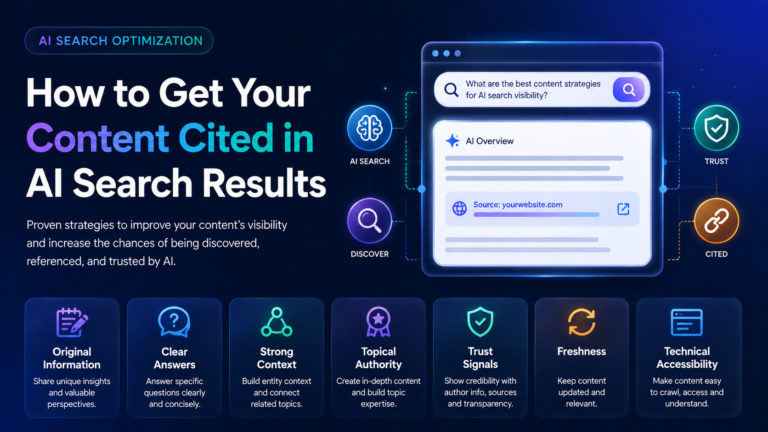
Instead, focus on creating content that is easy to understand, easy to trust, and genuinely useful.
Start with search intent
Every article should begin by understanding what the reader is trying to accomplish.
Do not optimize around keywords alone.
Optimize around the task.
Someone searching:
“best WordPress backup plugin”
is not simply collecting plugin names.
They are trying to protect their website.
Write for the outcome rather than the keyword.
Answer the main question immediately
AI systems value clear explanations.
Place a concise answer near the beginning before expanding into greater detail.
This also improves Featured Snippet opportunities.
Build topical authority
Publishing one article about AI search is not enough.
Create connected resources that naturally support each other.
For example:
- Google AI Overviews
- AI Search Explained
- SEO vs AEO vs GEO
- Search Intent
- Entity SEO
- AI Content Optimization
Each article strengthens the others.
Organize content logically
Readers should never struggle to understand your structure.
Use descriptive headings.
Group related ideas.
Keep paragraphs short.
Move from beginner concepts toward advanced explanations.
Good organization helps both humans and AI systems understand relationships between ideas.
Demonstrate real expertise
Readers increasingly recognize recycled content.
Instead of repeating common advice, explain:
- Why Google behaves a certain way
- What mistakes publishers commonly make
- Which strategies still work
- Which myths should be ignored
- How different situations require different decisions
Original thinking builds trust.
Keep content updated
AI Search changes rapidly.
An article published once and forgotten may slowly lose relevance.
Review important pages regularly.
Update screenshots.
Expand explanations.
Remove outdated recommendations.
Add new examples.
Freshness alone does not guarantee rankings, but accurate information builds long-term credibility.
Common Mistakes Publishers Make
Many websites are reacting to AI overviews emotionally instead of strategically.
Here are the most common mistakes.
Publishing generic content
If your article repeats information already available everywhere, AI can summarize it easily.
Publish what only your website can provide.
Obsessing over keywords
Keywords remain useful.
They should no longer drive every writing decision.
Solve problems instead.
Ignoring user intent
Search intent explains the query.
User intent explains the goal.
The difference matters.
Writing for algorithms
Readers notice when content exists only to rank.
Google notices too.
Write for humans first.
Chasing every trend
Not every AI announcement requires a new article.
Focus on evergreen topics that continue helping readers long after the news cycle ends.
Building isolated content
One article rarely establishes authority.
Clusters create confidence.
Publish supporting content around your most important topics.
The Future of AI Search
AI Overviews are unlikely to be the final stage of Google Search.
Search is becoming more conversational, more personalized, and increasingly focused on completing tasks rather than simply returning links.
Users will expect search engines to:
- Understand complex questions.
- Combine multiple pieces of information.
- Recommend next steps.
- Help compare options.
- Support decision-making.
- Publishers who continue producing shallow content may struggle.
- Publishers who invest in expertise, original research, practical workflows, and topical authority will continue finding opportunities.
- SEO is not disappearing.
- It is becoming more sophisticated.
- Success will depend less on repeating keywords and more on becoming a trusted source that both humans and AI systems confidently reference.
Final Thoughts
Google AI Overviews represent one of the biggest changes to Search in the last decade, but they should not be viewed as the end of traditional SEO.
Instead, they highlight a shift in priorities.
Google still relies on publishers to create accurate, helpful, and trustworthy information. AI simply changes how that information is discovered and presented.
For bloggers, businesses, and SEO professionals, the objective is no longer just ranking first.
It is becoming the source that deserves to be referenced.
That means understanding search intent, building topical authority, publishing original insights, maintaining high-quality content, and creating resources that genuinely help people solve problems.
The websites that embrace those principles will continue earning visibility, whether users discover them through traditional search results, Google AI Overviews, or the next generation of AI-powered search experiences.

Nikunj Pandya
Nikunj Pandya is an AI and technology professional with over 5 years of experience exploring how emerging technologies can solve real-world problems. He focuses on Artificial Intelligence, AI Search, and AI tools, sharing practical insights to help readers understand and make better use of new technology.